

Disclaimer: The information shared here is based on professional experience and is intended for general guidance. It is not specific marketing advice. Each business requires its own strategy.

Local SEO for Lawyers | WSI Biggs Digital | Atlanta
Potential clients search Google before they ask a friend for a referral. When someone searches for a lawyer in your area, your firm either shows up in the results or it doesn't. Local SEO is what decides which one happens.
Does your website or Google Business Profile show up when someone searches for a lawyer near them? That's what local SEO for law firms is built to answer.
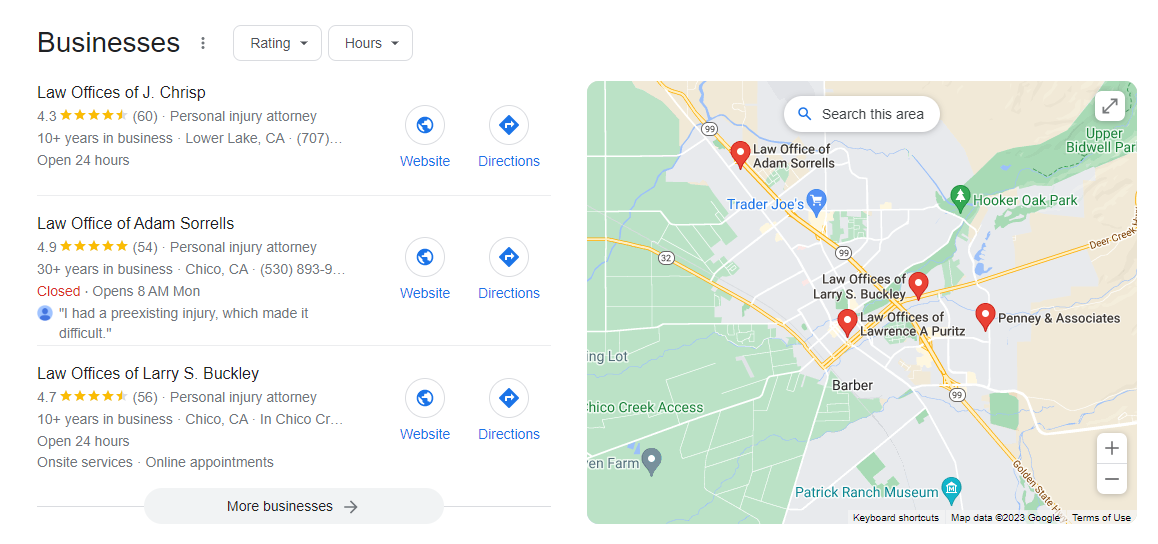
Local SEO focuses on visibility in the map pack, the three listings Google shows for a location-based search. Broader organic SEO still matters too, it's part of how legal prospects evaluate a firm once they've found it.
Key Takeaways
- Local SEO decides whether a firm shows up in Google's map pack and local search results, separate from general organic rankings.
- A complete, accurate Google Business Profile is the single biggest factor in local visibility.
- Consistent name, address, and phone number (NAP) across every directory listing matters as much as the profile itself.
- Location-specific content and local business schema markup both help a firm appear in local search and the map pack.
Why Local SEO Matters for Law Firms
Imagine someone needing a lawyer for a DUI case. They'll likely search for something like "DUI attorney near me" or "best DUI lawyer in Atlanta". Proximity search algorithms pick up on these location-specific keywords and aim to connect users with relevant businesses in their vicinity.
Legal search is different from a typical local search though. Someone isn't looking for the nearest place to buy food, they're looking for a firm they can trust. An empty or incomplete Google Business Profile reads as a red flag, and clients will move on to a firm with a stronger online presence.
What happens when they see that you have an empty profile on Google Maps? Clients are most likely to look for other law firms that have a more established online presence. That is what makes
local SEO for lawyers a pivotal part of your online strategy. You'll come across as a more reputable law firm when your online presence is on point.
Local SEO Strategies for Lawyers
1. Claim and optimize Google Business Profile(GBP)
Claim and verify your firm's profile on Google. Keep your name, address, and phone number (NAP) accurate and identical everywhere it appears online. Add photos of your office and team, and a clear description of your practice areas. Respond to reviews, both positive and negative, and post updates regularly so the profile doesn't go stale.
2. How do law firms show up in the Google Map Pack?
Google prioritizes businesses with a physical presence near the searcher. Mention your city and surrounding areas naturally in your website content and GBP, that's what increases your odds of appearing in the map pack, the top three listings shown for location-based searches.
3. Citations: get listed in directories
Citations are online mentions of your law firm's NAP(Name, Address and Phone number) across various directories. Focus on high-quality legal directories like
Avvo,
Justia, and
FindLaw. Additionally, consider local business directories and general directories like Yelp and Yellow Pages. Consistent NAP information across all listings is vital.
4. Conduct an extensive keyword search
Identify relevant keywords people use to search for legal services in your area. Combine practice areas with location (e.g., "Civil rights lawyers in Marietta") to target near by searches. Include your specific law practice, such as personal injury law, and target the city or state that you serve. Then, make sure that these keywords are embedded naturally in your Google Business Profile and website for local intent.
5. Add a local schema for attorneys
Local business schema markup is like a special code you can add to your website to allow search engines, like Bing or Google, find important details about your business more easily. Information such as reviews, your firms locations, phone number, office hours are all embedded in this markup.
This markup language was created in 2011 by the major search engines, you can find templates and descriptions of the schemas at schema.org By providing this information in your markup you improve in appearing in the local packs and Google Maps. Properly defining your local business schema will increase your visibility and in turn attract more clients.
For lawyers, there is a specific
local schema for attorneys that you can use. This will help indicate that your website provides legal services. The advantage of a local schema is the rich information displayed on Google when a user makes a query. It convinces clients that you're a law firm they can trust with their legal concerns.
6. Content marketing for local Attorney SEO
Write blog content and website pages that answer real legal questions relevant to your local audience. Local keywords woven into that content, alongside real expertise, attract organic traffic and build authority over time.
Check What Other Law Firms Are Doing
Analyze competitor websites for structure, content, and user experience. Look for their practice areas, target audience, and marketing strategies. Are their websites mobile-friendly? Do they offer informative blog content?
Try this: use tools to help you analyze what keywords your competing legal firms are using - "Personal Injury Law Firms in Atlanta" You can also uncover what websites they're linking to. It gives you a glimpse of their marketing strategy that you can implement in your practice as well. Here are a few of them:
- ChatGPT or Perplexity - ask AI to see if you show up and if not what you can do to fix it.
- Moz or SEMrush - can offer basic insights into competitor website traffic and keyword rankings.
- Ahrefs - website traffic, keyword rankings, backlinks, and content strategy.
- Brandwatch or Sprout Social - allows you to monitor competitor brand mentions and track online conversations about their firm.
With the information you can gather, it will be easier to gain a competitive edge in your local market. However, don't engage in copying competitor content or unethical marketing practices. The best thing to do is to stay updated on legal marketing trends and competitor strategies. Then refine your marketing strategy. Focus on what applies to your legal practice.
Additional Tips for Local SEO Success
Keep your site mobile-friendly. Put a clear call to action on every page. Track performance regularly instead of setting it and forgetting it. Stay current on SEO changes. Build real local partnerships. Use photo and video content where it fits.
Running local SEO well takes ongoing attention most firms don't have time for on top of practicing law. That's the case for working with an agency that specializes in it.
Contact WSI Biggs Digital to talk through a local SEO plan for your firm.
FAQ
What is local SEO for a law firm? Local SEO is what determines whether a firm shows up when someone searches for an attorney near them, in Google's map results and in searches tied to a location.
What's the difference between local SEO and general SEO for a law firm? General SEO covers how a site ranks for any search term. Local SEO covers rankings tied to a location, driven by a Google Business Profile, consistent listings, and location-specific content.
What should a law firm do first to improve local search visibility? Claim and fully complete a Google Business Profile, keep the firm's name, address, and phone number consistent everywhere it's listed, and publish content that answers what a potential client in that area is actually searching for.
KELLY BIGGS
About the Author
Kelly is a Marketing Executive and Principal Consultant at WSI. Kelly has over 20 years of sale and marketing experience. She works with client to employ powerful digital marketing strategies and often writes about SEO, website optimization, and social media.
The Best Digital Marketing Insight and Advice
Subscribe Blog
For information on our privacy practices and commitment to protecting your privacy, check out our Privacy Policy and Cookie Policy.
Don't stop the learning now!