
Disclaimer: The information shared here is based on professional experience and is intended for general guidance. It is not specific marketing advice. Each business requires its own strategy.
How Businesses Show Up in ChatGPT and AI Search Results?
What new search platforms means for your business.
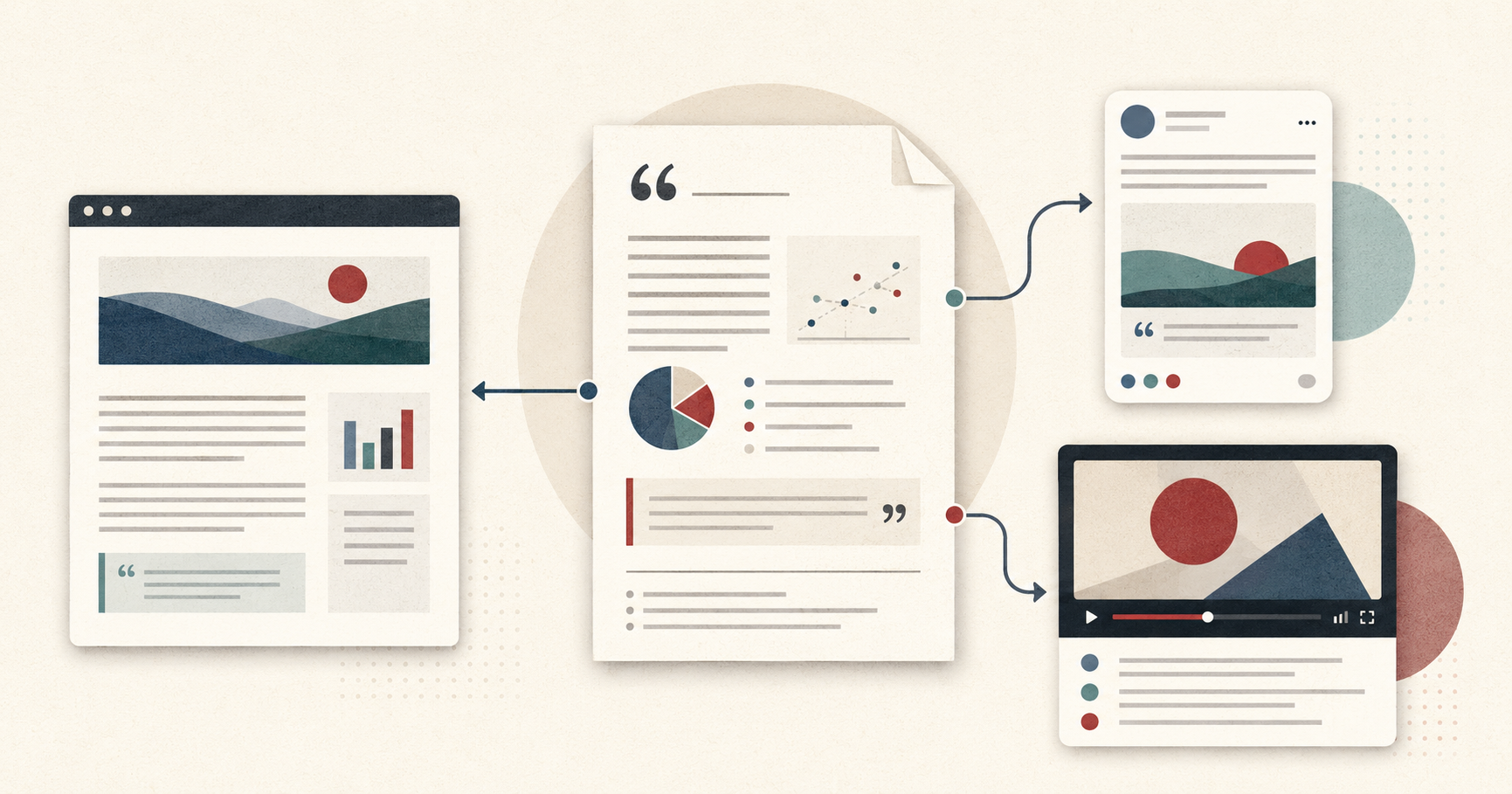
To show up in ChatGPT and AI search results, businesses need two things.
First, traditional SEO fundamentals still matter. Your website must be technically sound, accessible to crawlers, and properly indexed. Many of the systems that support organic search also support AI visibility.
Second, AI search requires content that goes beyond rankings. Businesses need clear, direct answers to real questions, written in a way AI systems can confidently reuse.
Showing up in AI search is not about replacing SEO. It’s about building on it.
What “showing up” in AI search actually looks like
When people talk about visibility in ChatGPT or AI search, they usually mean one of three things.
Best case:
Your business is named, and your content is referenced.
Still useful:
Your brand is mentioned, even if there isn’t always a link.
Worst case:
Your ideas are used, but your business isn’t credited.
The goal is to be the source AI pulls from, not the background material it quietly borrows.
How ChatGPT decides what to include
ChatGPT and other search engines are looking for answers that they can reuse with confidence. Content is more likely to be pulled into AI responses when:
- The question is stated plainly
- The answer appears immediately
- The explanation stays focused
- The tone sounds instructional, not promotional
This mirrors what we see in our work every day. Content that performs well in AI search reflects how real client questions come up in conversation, not how keywords are arranged for rankings.
That’s why FAQs still matter, but not keyword-heavy FAQs written for search engines. What works are fundamental questions written in plain language, followed by direct answers that stand on their own. When content sounds interchangeable, AI systems usually default to the most established source. That’s why larger brands often win visibility by default, even when their answers aren’t better.
For smaller and mid-sized firms, copying what already ranks rarely builds authority. It often reinforces someone else’s expertise instead of establishing your own.
To stand out, you need to say something others aren’t saying. That may come from your local market, your client mix, or what you see happening in your region that differs from broader online advice. That perspective is often where smaller firms have an edge.
When you write content, strong SEO foundations still matter. Technical SEO, site structure, and crawlability help AI systems access and interpret your content. Your point of view and experience help determine whether that content is reused.”
Where AI search creates an opening for businesses
AI search quietly rewards specificity.
In practice, AI systems are more likely to reuse content when it helps narrow a decision rather than generalize a topic. This is where many businesses gain visibility, even in competitive markets.
Content tends to perform better in AI search when it:
- Speaks to a defined audience instead of everyone
- Addresses questions others avoid
- Explains tradeoffs instead of oversimplifying
- Clarifies common misunderstandings
- Describes what usually goes wrong
- This creates an opening for firms willing to be precise, practical, and honest about how decisions are made.
AI systems reuse content that answers real questions and can stand on its own. That starts with writing for actual client conversations, not generalized search traffic.
Focus on the questions buyers ask when they are deciding, not browsing:
- Is this worth the cost?
- How long does this usually take?
- What happens if we wait?
- What should we avoid?
- What’s the difference between these options?
These questions are often avoided because they require nuance. That nuance is exactly what makes the answers useful.
State the answer early. The opening sentences should deliver the takeaway. Context, tradeoffs, and examples can follow, but the answer should not be buried.
Write in complete, reusable sentences. AI systems are more likely to reuse short, complete answers than long, layered explanations.
Finally, rely on what you actually see in practice. Content becomes more usable when it reflects where things break down, when an option sounds right but isn’t, or why timing changes outcomes.
As a result, this approach supports E-E-A-T (experience, expertise, authority, and trust) by showing how decisions are made.
KELLY BIGGS
About the Author
Kelly is a Marketing Executive and Principal Consultant at WSI. Kelly has over 20 years of sale and marketing experience. She works with client to employ powerful digital marketing strategies and often writes about SEO, website optimization, and social media.
The Best Digital Marketing Insight and Advice
Subscribe Blog
For information on our privacy practices and commitment to protecting your privacy, check out our Privacy Policy and Cookie Policy.
Don't stop the learning now!