
Disclaimer: The information shared here is based on professional experience and is intended for general guidance. It is not specific marketing advice. Each business requires its own strategy.
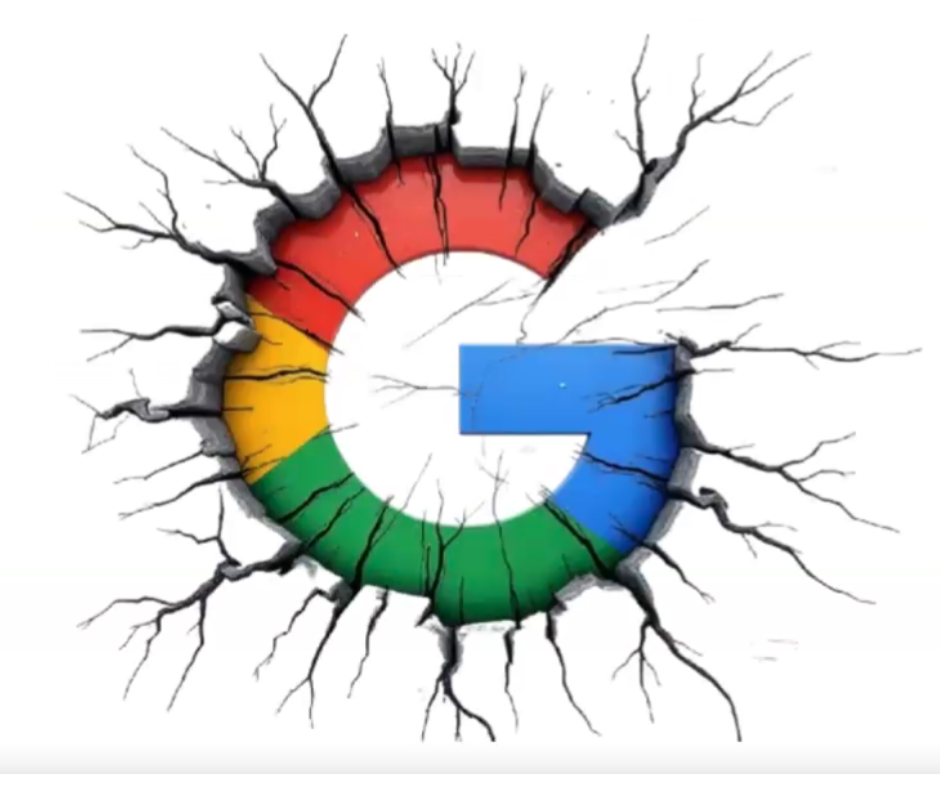
Is Google Still Enough?
How AI and Generational Search Are Changing Where Clients Look for You
For years, ranking on the first page of Google meant inbound calls. If you were visible, the phone rang.
That model is changing, and with good reason. AI-generated answers now take up the top of the page, pushing traditional organic listings further down. At the same time, buyers are starting their research in more places than Google alone.
Google remains the primary search engine for most people. But for professional services firms that depend on discovery, relying on Google alone no longer reflects how clients evaluate and choose providers.
This article examines what has changed, why it matters, and how firms should respond.
How AI Is Changing Where Clients Search
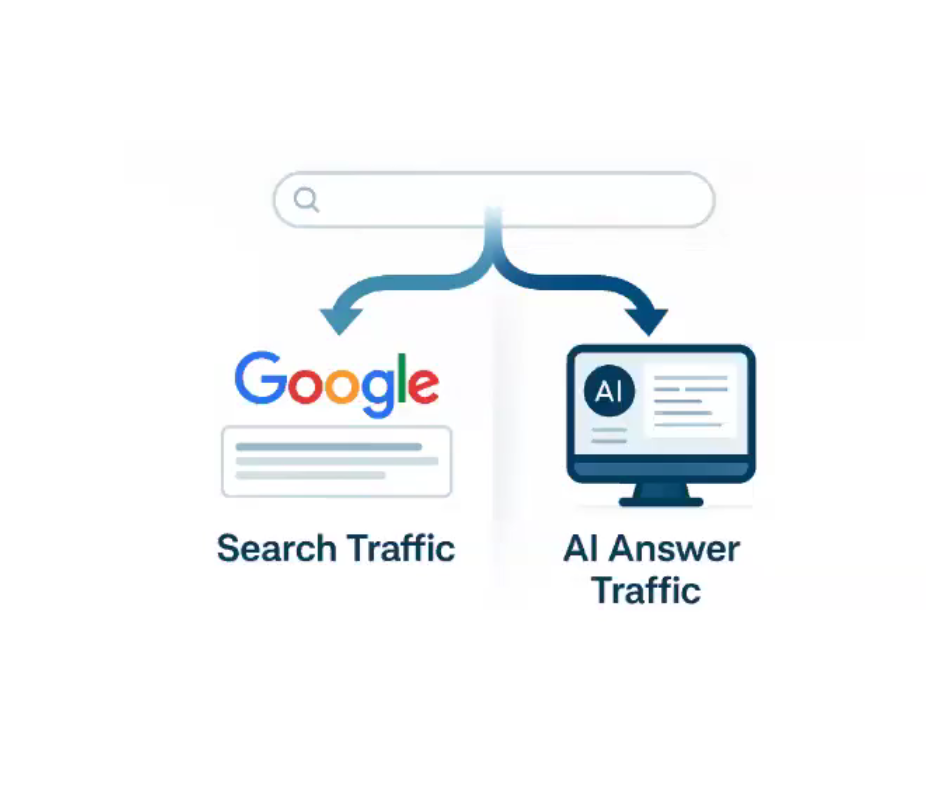
AI has added another layer to how people look for answers. Some users now start with an AI assistant before opening Google. Others search on Google but read the AI-generated summary at the top before deciding whether to scroll. In both cases, the path to a website is less direct than it used to be.
Gartner predicts search engine volume will drop 25 percent by 2026 due to AI chatbots and other virtual agents. The exact percentage may change, but the pattern is clear.
Search now happens across Google, AI assistants, and platform-native tools. If your strategy assumes every buyer begins and ends on Google, you are planning for a narrower version of reality. As Search Engine Land has outlined, AI search represents the next era of SEO, not its end. Structured, credible web content remains the foundation. The difference is where that content appears and how clients encounter it.
Search Behavior Varies by Generation and Role
Your presence should reflect the full path prospects take before they reach out. Google is still part of it, but it’s rarely the only search engine of choice. How someone searches often reflects both their age and how they prefer to make decisions.
Many Gen X professionals use AI tools right alongside Google. Millennials often compare across environments before reaching out, reviewing LinkedIn profiles, watching videos, and reading peer discussions. Gen Z frequently begins inside TikTok, Grok, or another AI-native platform as part of early research.
Age plays a role, but research style often carries more weight. Some buyers want a straightforward list of firms. Others prefer a concise, synthesized answer. Some validate through professional networks. Others consult conversational AI before ever visiting a website.
For professional services firms, that variation shapes how you’re evaluated. A managing partner may search your firm by name. A younger decision maker may ask an AI assistant for recommendations. Many prospects assess credibility across multiple platforms before deciding to make contact.
Search now spans across multiple platforms. Your visibility should align with how real decisions are made.
Technical SEO Is the Foundation for AI and Google
Because discovery now happens across Google and AI platforms, structure is now the common denominator. AI systems are logical. They process defined entities, structured headings, and clearly marked relationships. When a page lacks structure or mixes topics loosely, it becomes harder for both search engines and AI systems to determine what it represents.
We consistently see that pages with appropriate schema applied are referenced by AI more often than pages without it. That reflects how these systems evaluate and prioritize information.
Technical SEO strengthens:
- Entity definition
- Topical hierarchy
- Internal relevance
- Context between related pages
- Trust signals across systems
Schema markup defines what a page represents. Clean internal linking reinforces subject relationships. Structured headings establish hierarchy. Page-level focus signals authority.
The good news is that if you invested in SEO, it wasn't wasted. In many cases, it is more valuable now because the same technical structure supports visibility in both traditional search results and AI-generated answers.
We cover how businesses appear in ChatGPT and AI search results in more detail
here.
The broader question of whether SEO still works for service businesses is addressed in a separate
blog post.
Both articles reach the same conclusion: the technical base matters.
How to Compete When Google Alone Is No Longer Enough
If you are asking whether SEO is still worth the investment, the answer is yes. What is changing is what other platforms you will need to be visible on.
Start with the foundation. Technical SEO is not optional in a competitive market. If you haven’t looked closely at your technical foundation in the last year, that’s the first place to start.
If AI systems and Google cannot clearly interpret what your firm does, who you serve, and how your services are structured, your competitors will be referenced (and likely chosen) instead.
That means:
- Schema that defines your services and entities
- Clear service pages with focused topics
- Logical internal connections between related pages
- Clean site architecture that reinforces subject matter
If that layer is weak, publishing more content or experimenting with AI tools will not compensate for it.
Test your online visibility
Begin by seeing where your firm actually shows up online. Search your primary services in Google. Ask ChatGPT or another AI assistant for recommended providers in your market. Review LinkedIn and relevant industry directories.
If competitors appear consistently, and you do not, it reflects a lack of structure, authority, and coverage.
In competitive markets, when you don’t show up, someone else does. You are competing for inclusion in summaries, recommendations, and cross-platform validation.
If you are unsure where to begin, work with a digital marketing agency that specializes in online visibility for professional services firms. A structured visibility audit should evaluate how your firm appears across Google, AI platforms, and professional networks, and identify where authority, coverage, or technical structure needs to improve.
Competing Beyond Rankings
Five years ago, the primary competitive question was simple: who ranks higher?
Today, the better question is: where does your firm show up across the full research journey?
Visibility now spans Google results, AI-generated answers, and platform-native search inside LinkedIn, YouTube, TikTok, and other social channels. Firms are competing for rankings, references, recommendations, and recognition across multiple environments. Being visible in one channel does not guarantee visibility in another.
In competitive markets, familiarity compounds. A firm that appears in Google results, is referenced by AI tools, and is validated across social platforms builds credibility faster than a firm that relies on a single source of discovery. The advantage now comes from coverage. Strong technical SEO supports Google and AI systems. Consistent messaging and authority signals extend that presence into social and professional networks.
AdaptiveSEO® is the practical response to this shift. It means structuring your visibility so your firm can be found, referenced, and recognized wherever clients conduct research. Your strategy should reflect the full path prospects take before they reach out.
FAQs
Is Google still enough for professional services marketing?
Google remains the primary search engine for most people, but it is no longer the only place clients begin research. AI-generated answers, platform-native search, and cross-platform validation influence decision-making. Firms relying solely on rankings operate with partial visibility.
How is AI changing search for law firms and CPA firms?
AI tools synthesize web content and often present answers before traditional results. This changes how clients encounter information and reduces reliance on scrolling through listings. Structured, authoritative content influences both search engines and AI-generated summaries.
Why does technical SEO matter more in the age of AI?
AI systems prioritize logical organization. Pages with schema markup, defined entities, structured headings, and clean internal linking are easier to interpret and reference. Technical SEO strengthens visibility across both traditional search and AI-driven environments.
Is investing in SEO still worth it?
Yes. Foundational SEO supports visibility in Google and AI systems. Technical structure, focused content, and clear site architecture compound over time, creating broader coverage across search environments.
KELLY BIGGS
About the Author
Kelly is a Marketing Executive and Principal Consultant at WSI. Kelly has over 20 years of sale and marketing experience. She works with client to employ powerful digital marketing strategies and often writes about SEO, website optimization, and social media.
The Best Digital Marketing Insight and Advice
Subscribe Blog
For information on our privacy practices and commitment to protecting your privacy, check out our Privacy Policy and Cookie Policy.
Don't stop the learning now!