
Disclaimer: The information shared here is based on professional experience and is intended for general guidance. It is not specific marketing advice. Each business requires its own strategy.
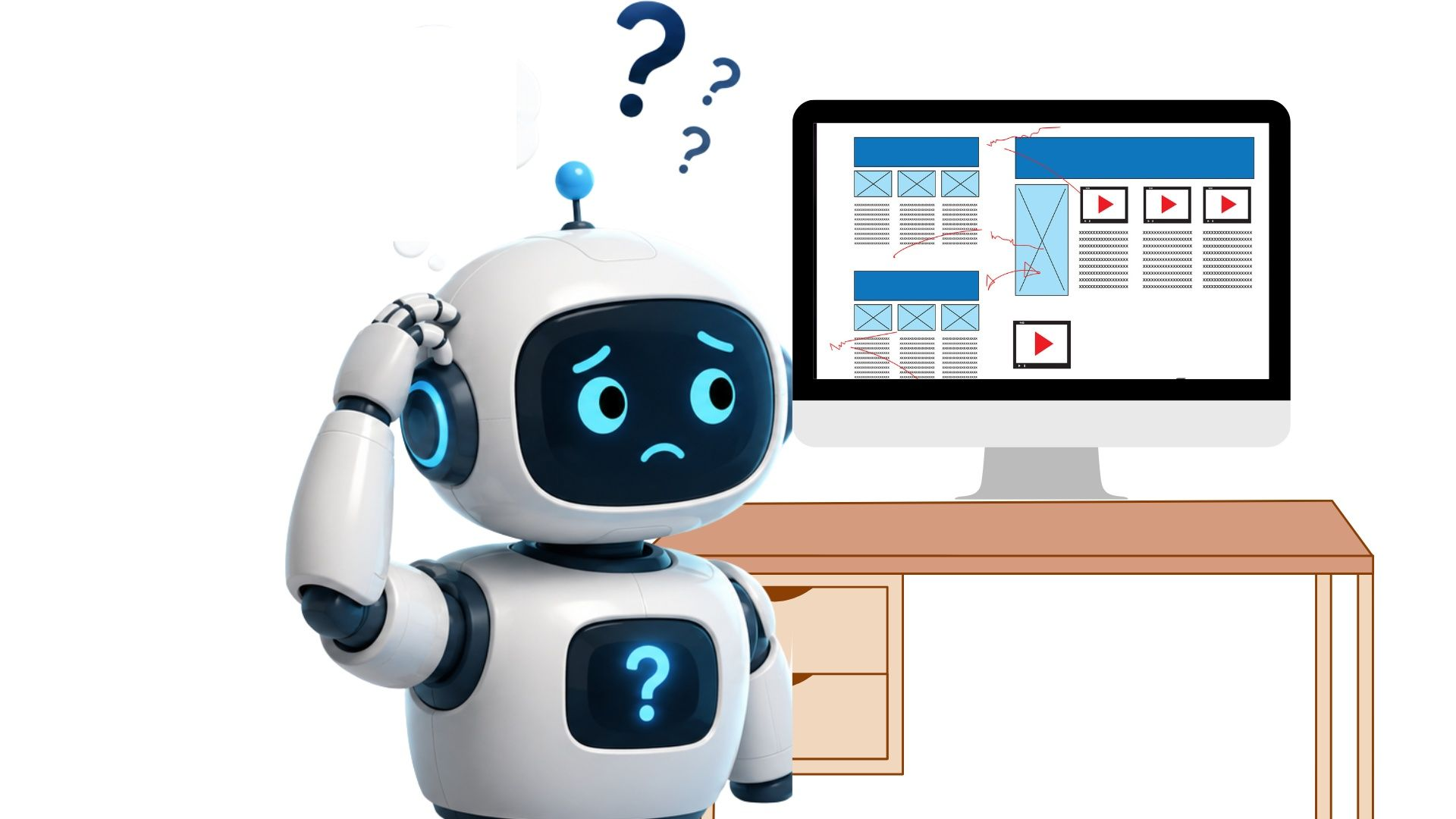
Why AI Can't Understand Most Business Websites
A business owner can spend thousands on SEO and still not appear in a single AI-generated answer. The website ranks. The content exists. But when ChatGPT, Perplexity, or Google's AI Overview goes looking for a source, it skips the page entirely.
The reason is usually not the content itself. ChatGPT, Perplexity, and Google's AI Overview all scan pages differently from how a traditional crawler does. They look for direct, plainly stated answers; clear descriptions of what a business does and who it serves; and a page structure that makes extraction straightforward. When those signals are scattered or buried under brand language, these systems move on.
Most business websites were built to guide a visitor through a journey. AI extraction does not work that way. According to data from Advanced Web Ranking, Google's AI Overview now appears in over 60% of U.S. search queries. That means the way your pages are structured has direct consequences for whether your business gets cited at all.
Key Takeaways
- AI systems like ChatGPT and Google's AI Overview extract answers from pages. They do not browse the way humans do. If your answer is buried three paragraphs in, it won't be pulled.
- A website that ranks well in traditional Google search can still be invisible in AI-generated responses. These are two different problems.
- Service pages that open with taglines and brand positioning, rather than plain descriptions of what you do, are harder for AI to classify correctly.
- When multiple services share one page without clear separation, AI systems get a weaker signal about what you actually specialize in.
- Placing conversion copy before the explanation works against AI extraction. The emotional setup does not help the AI understand the page.
- Fixing this does not require rebuilding the site. It requires rethinking where answers appear and how specifically you describe what you do.
Why AI Struggles With Business Websites
Traditional search engines have spent years learning to interpret imperfect page structures. They follow links, weigh signals, and make reasonable inferences about relevance. AI answer systems work on a shorter leash. They need clearly stated answers, consistent service descriptions, and a page structure that facilitates straightforward extraction. When those signals are missing, the page gets skipped.
Research from Ahrefs found that 76% of AI Overview citations come from pages already ranking in the top 10 organic results. That tells you something important: authority still matters, but it is not enough on its own. A well-ranked page with weak structure still loses the citation to a lower-ranked page that answers the question clearly.
Most Websites Were Built for Navigation, Not Extraction
A typical professional services website is organized around the visitor's experience. The homepage tells a brand story. Service pages describe outcomes. The about page builds credibility. That structure makes sense when a human is browsing.
AI systems do not browse. They extract. They look for a plain statement of what a business offers, followed by structured information that expands on it. When a homepage opens with a tagline and a hero image instead of a clear description of services, the AI has to work harder to classify the business. Sometimes it figures it out. Often it does not. A
well-structured website signals its purpose from the first sentence of every key page.
The navigation-first model made sense when the goal was to reduce bounce rate and create a journey. That model now works against AI readability.
How AI Reads a Website
When an AI system scans a page, it moves through a sequence of classification steps. Understanding that sequence explains why structure matters more than most businesses expect.
| Step | What AI Is Looking For | What Causes It to Fail |
|---|---|---|
| Identify the service | A plain-language statement of what the business offers | Taglines, mission statements, vague value props |
| Identify the audience | Who the service is for, stated directly | Generic language that could apply to anyone |
| Extract the direct answer | The answer to the most likely query, near the top | Answers are buried in paragraphs three or four |
| Determine topical confidence | Consistent focus across the page | Mixed services, off-topic sections, competing CTAs |
A page that clears all four steps earns the citation. A page that stalls at step one rarely recovers.
AI Looks for Direct Answers. Most Websites Hide Them.
This pattern appears across professional service websites: the actual answer to a visitor's question arrives in the third or fourth paragraph, after a section of scene-setting or positioning. For a human reader, that structure can feel natural. For an AI system to surface answers in a response, a page that opens with context before the explanation often loses to one that leads with the answer.
The
website optimization practices that improve traditional rankings do not automatically address this. A page can load fast, carry the right keywords, and sit in a top-five position while still burying its most useful content behind introductory paragraphs. Data from Seer Interactive shows that being cited in an AI Overview increases click-through rate by more than 80%. The structural adjustment that earns that citation is placing the answer first.
Category Structure Matters More Than Most Businesses Realize
AI systems use category signals to understand what a business offers and how its services relate to each other. When services are grouped logically, the AI can extract not just that a business exists in a space, but what it specializes in and who it serves. When services are mixed together on a single page or listed without differentiation, the AI receives a weaker signal.
A law firm that handles estate planning, business contracts, and personal injury on the same service page is harder to classify than one where each practice area has its own dedicated page with direct answers at the top. A marketing agency that lists 12 services under a single heading gives the AI less to work with than one that separates paid search, SEO, and content marketing into distinct, clearly explained pages.
The goal is specificity. Each service category needs enough space to be understood on its own terms, with its own direct answer at the top of the page.
Conversion Copy Can Interfere With AI Understanding
Conversion-focused copy follows a logic that makes sense in a sales context: establish rapport, create desire, then present the offer. The problem is that this structure places the explanation of what you do after the emotional setup. For AI extraction, that ordering works against you.
When a service page opens with "You deserve a marketing partner who understands your goals" before explaining what services the firm actually provides, the AI reads brand language first and service information second. The brand language does not help classify the page. It adds noise before the signal.
Direct statements work better for AI visibility. Here is what the difference looks like in practice:
| Page Copy Type | Example Copy | What AI Can Understand |
|---|---|---|
| Vague brand statement | Helping businesses grow online since 2004. We are passionate about your success. | No clear service, audience, industry, or location. |
| Direct service statement | We provide SEO and paid search management for Atlanta law firms and professional service businesses. | Service type: SEO and paid search. Audience: law firms and professional service businesses. Location: Atlanta. |
The second version gives AI systems four classifiable signals in one sentence: service type, marketing channel, target industry, and location. The first version sounds positive, but it does not give AI enough concrete information to understand who the business serves or what it offers.
Weak Service Differentiation Creates AI Confusion
One thing that trips up many professional service websites is that every page sounds like the others. The same phrases about experience, results, and client focus appear on the homepage, each service page, and sometimes even the about page. When the language is interchangeable across pages, AI systems have a harder time identifying what makes each page distinct.
What does this service include? Who is it for? What problem does it solve? What does the process look like? These are the signals AI systems use to understand and categorize content. Generic language answers none of those questions, and a page that answers none of those questions does not get cited.
| Version | Copy |
|---|---|
| Generic | Our experienced team delivers results-driven solutions tailored to your goals. |
| Classifiable | We manage Google Ads campaigns for home service businesses, focusing on lead cost and call volume. |
The first sentence gives AI no useful context. The second sentence identifies the service, audience, platform, and outcome.
Signs Your Website May Be Hard for AI to Understand
Run through this list against your current site. The more items that apply, the more likely AI systems are struggling to classify your pages correctly.
Service pages open with brand positioning or taglines instead of a direct description of the service- The answer to a visitor's main question appears several paragraphs into the page
- Multiple unrelated services share a single page with no structural separation
- Headings describe the firm rather than answering buyer questions
- Every page uses similar language regardless of the service being described
- Blog posts are ordered by publish date with no topical grouping
- Practice areas or specialties are listed but not explained
- The site explains process before establishing what the business actually does
- Location or industry focus appears only in the footer or contact page
Any of these patterns reduces the confidence AI systems can have in classifying your pages accurately.
What to Do About It
Start with your highest-value service pages. Rewrite the opening paragraph of each one to lead with a plain-language description of the service, who it serves, and what problem it solves. Move brand language and conversion copy lower, after the explanation.
Check your headings against the checklist above. If they describe the firm instead of answering a buyer's question, rewrite them. Give each service its own dedicated page with enough room to be understood on its own terms.
If the current site structure makes these changes difficult to execute, that is a signal that the architecture itself needs work. A
website redesign built around AI and search visibility fixes these issues at the structural level rather than through surface edits.
Why does AI ignore my website even though it ranks on Google?
Google and AI answer systems use different criteria. Google evaluates signals like keyword relevance, backlinks, and page authority. AI systems prioritize direct answers, clear topic focus, and content that can be extracted cleanly without requiring the reader to scroll through setup or brand language. A page can rank well in Google while still being passed over by AI systems if the actual answers are buried or the topic coverage is too broad.
Does having more content on a page help AI visibility?
Length does not help on its own. What matters is whether the content directly answers specific questions and whether the page maintains a consistent topical focus. A 400-word page that opens with a direct answer and covers one service clearly will perform better in AI extraction than a 2,000-word page that mixes multiple services and buries answers in the middle.
What kind of headings does AI respond to better?
AI systems respond better to headings that mirror real buyer questions because they signal exactly what the section answers. "What does paid search management include?" is a cleaner extract than "Our Services." "Who should consider estate planning?" performs better than "About Estate Planning." The heading tells the AI and the reader precisely what follows.
Does AI only look at text, or does page structure matter too?
Page structure matters as much as the text itself. AI systems read heading hierarchy, paragraph placement, and content organization to build a map of the page before extracting answers. A clear H1, H2, and H3 structure that reflects the topic gives these systems a reliable guide. A page built as one long text block with inconsistent headings is significantly harder to extract accurately.
How often should we review a website for AI readability?
Reviewing your highest-traffic service pages quarterly is a practical baseline, given how quickly AI search behavior is shifting. Check whether your business appears in AI-generated answers for your core service and location queries. Where you are absent or misclassified, adjust the page structure and answer placement. This does not require constant revision, but it does require treating AI visibility as an ongoing part of website maintenance rather than a one-time fix.
If we fix these issues, how long before we see results in AI search?
The timeline varies, but structural changes to high-value pages typically register in search systems within 30 to 60 days, depending on how frequently those pages are crawled. AI-generated answers update as systems re-index pages and reprioritize sources. Significant structural improvements can produce visible changes within a few weeks on pages that already carry some authority.
FAQs
KELLY BIGGS
About the Author
Kelly is a Marketing Executive and Principal Consultant at WSI. Kelly has over 20 years of sale and marketing experience. She works with client to employ powerful digital marketing strategies and often writes about SEO, website optimization, and social media.
The Best Digital Marketing Insight and Advice
Subscribe Blog
For information on our privacy practices and commitment to protecting your privacy, check out our Privacy Policy and Cookie Policy.
Don't stop the learning now!